Object 3D Reconstruction
Repository: https://github.com/OlafenwaMoses/vizion3D
Category: Reconstruction Experimental: No
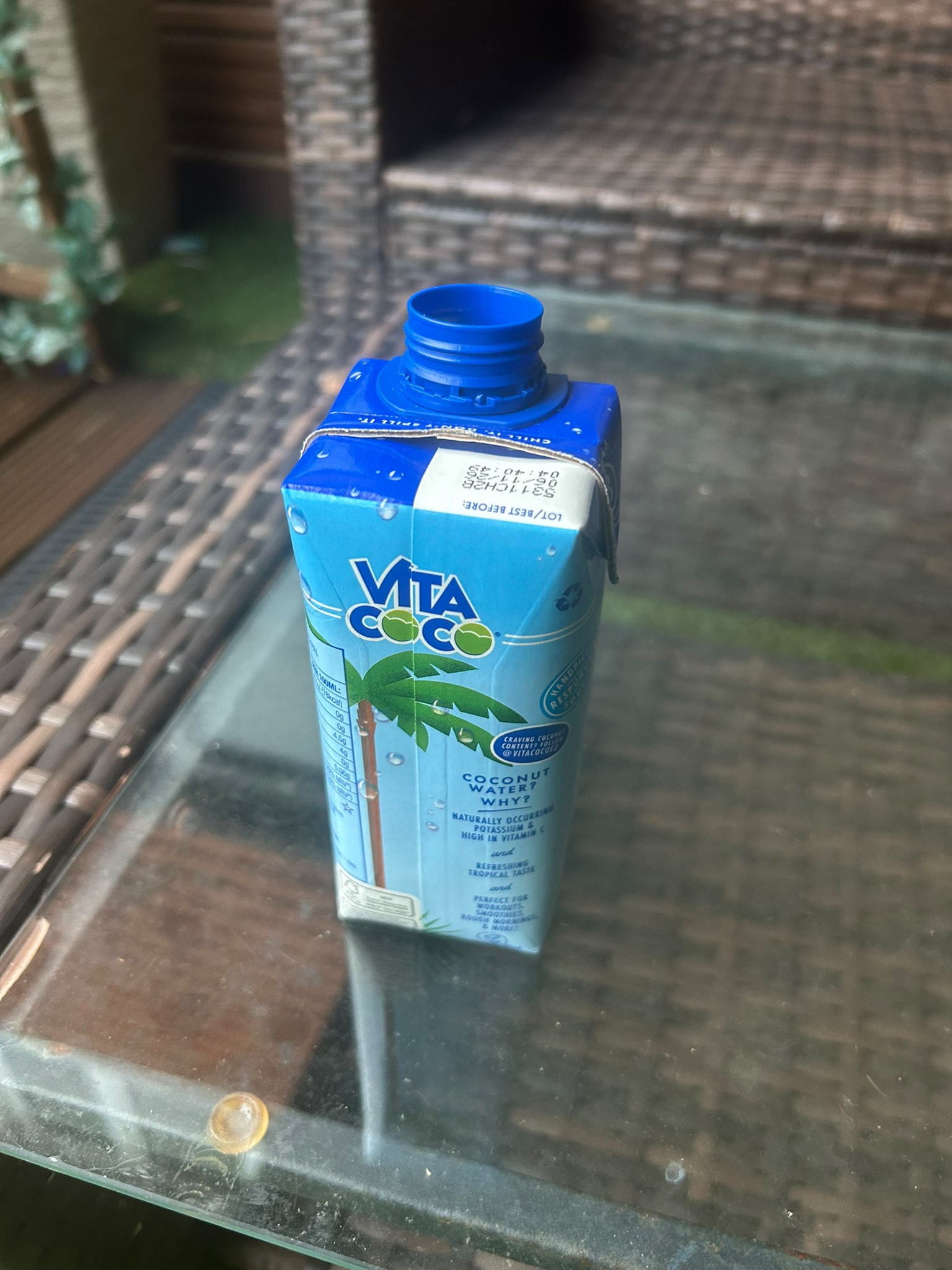
Object3DReconstruction takes a close-range image of one object and produces a
cleaned, uniformly gray 3D mesh plus a uniformly gray point cloud sampled from
that mesh surface.
The task is intended for object-centric images: product shots, cropped objects,
or a single object occupying most of the frame. For broader scene images, use
SceneComponents3DReconstruction.
What It Does
The object pipeline is:
- Load the image and cap the longest side to
max_input_dimension. - Isolate the foreground object from the background.
- Normalize the foreground into a centered square conditioning image.
- Generate a 3D mesh from the conditioned object image.
- Clean the mesh, force a uniform gray material, and sample a gray point cloud.
Background removal always runs. There is no option to disable it for this task. The output is intentionally gray so downstream workflows get geometry without texture baking or texture-job side effects.
The sample above uses production-default mesh settings:
marching_cubes_resolution=256, point_count=200000, and
smoothing_iterations=5.
Install and Runtime Assets
Install vizion3d with the hardware extra for your machine, for example
vizion3d[cpu], vizion3d[mps], vizion3d[cuda], or vizion3d[amd].
Those hardware extras include the reconstruction runtime dependencies. See
the Hardware Acceleration page for the supported
install commands.
The task resolves the reconstruction runtime asset bundle from:
- the explicit
model_bundlecommand field; VIZION3D_RECONSTRUCTION_MODEL_BUNDLE;~/.cache/vizion3d/models;- the repository root;
- the default
essentials-v1GitHub release asset URL.
If no local bundle exists, the default release asset is downloaded and cached before extraction. The bundle contains the runtime assets needed for foreground isolation, mesh generation, and optional accelerated execution.
Direct download: scene-components-3d-models.zip
Python Usage
from vizion3d.reconstruction import (
    Object3DReconstruction,
    Object3DReconstructionCommand,
    Object3DReconstructionConfig,
)

command = Object3DReconstructionCommand(
    image_input="object.png",
    model_bundle="/path/to/reconstruction-assets.zip",
    advanced_config=Object3DReconstructionConfig(
        max_input_dimension=1080,
        marching_cubes_resolution=256,
        point_count=200_000,
        device="auto",
    ),
)

result = Object3DReconstruction().run(command)

mesh = result.mesh
point_cloud = result.point_cloud
print(result.vertex_count, result.face_count, result.point_count)
Command Parameters
| Parameter | Type | Required | Default | Description |
|---|---|---|---|---|
image_input |
str \| bytes |
Yes | — | Object image path or raw image bytes. |
model_bundle |
str \| None |
No | Auto-resolved | Path to the reconstruction runtime asset bundle. |
advanced_config |
Object3DReconstructionConfig |
No | Defaults | Mesh, point-cloud, image-size, and device settings. |
Config
| Field | Default | Description |
|---|---|---|
max_input_dimension |
1080 |
Caps the longest source-image side before background removal. Values above 1080 are rejected. |
marching_cubes_resolution |
256 |
Mesh extraction resolution. Higher values can preserve more detail and cost more memory/time. |
density_threshold |
25.0 |
Mesh extraction density threshold. |
point_count |
200000 |
Number of surface points sampled from the cleaned mesh. |
device |
"auto" |
Device preference. auto prefers available acceleration and falls back to CPU by stage. |
foreground_ratio |
0.82 |
Foreground normalization ratio after background removal. |
smoothing_iterations |
5 |
Mesh smoothing passes after reconstruction. |
min_component_area_ratio |
0.02 |
Removes very small disconnected mesh components. |
Result Fields
| Field | Type | Description |
|---|---|---|
mesh |
trimesh.Trimesh |
Cleaned uniformly gray mesh. |
point_cloud |
open3d.geometry.PointCloud |
Uniformly gray point cloud sampled from the mesh surface. |
backend_used |
str |
Resolved runtime asset extraction directory. |
vertex_count |
int |
Mesh vertex count. |
face_count |
int |
Mesh face count. |
point_count |
int |
Sampled point-cloud size. |
REST and gRPC Jobs
The REST and gRPC server APIs run this task as a background job because mesh generation can take longer than a normal request timeout.
REST:
curl -X POST http://localhost:8000/reconstruction/object-3d-reconstruction \
  -F "image=@object.png" \
  -F "model_bundle=/path/to/reconstruction-assets.zip" \
  -F "device=auto"
The response is 201 Created:
{
  "job_id": "9f0a...",
  "status": "queued",
  "expires_at": "2026-06-16T21:00:00+00:00",
  "max_result_reads": 10,
  "result_reads_remaining": 10
}
Poll with:
curl http://localhost:8000/reconstruction/object-3d-reconstruction/9f0a...
While queued or running, polling returns 202. When complete, it returns 200
with:
{
  "status": "succeeded",
  "result": {
    "mesh_ply": "<base64 PLY>",
    "point_cloud_ply": "<base64 PLY>",
    "vertex_count": 53965,
    "face_count": 107926,
    "point_count": 200000
  }
}
gRPC:
RunObject3DReconstructionsubmits the job and returnsReconstructionJobSubmission.GetObject3DReconstructionResultpolls byjob_idand returnsObject3DReconstructionJobResponse.
Completed results are stored in a small temp job folder on the server machine.
Set VIZION3D_JOB_DIR to control that folder. A result can be retrieved up to
10 times and expires after 24 hours.
Device
Object3DReconstructionConfig(device="auto") propagates the selected device to
the foreground-isolation and mesh-generation stages where the installed runtime
supports acceleration. auto prefers available acceleration and falls back to
CPU. If an accelerated stage fails, the task retries that stage on CPU.
Input Resolution
The task limits the longest input-image dimension to 1080 pixels before background removal. The resize preserves aspect ratio. This avoids spending memory and inference time on source pixels that will be normalized into the fixed-size conditioning image. The config may lower this limit, but values above 1080 are rejected.
Practical Notes
- Use object-centric images. Small or cluttered objects in a full room image are
better handled by
SceneComponents3DReconstruction. - The task estimates geometry from one image; hidden backsides are inferred by the reconstruction stage and should not be treated as measured ground truth.
- Output colors are uniform gray by design. Texture generation is not part of this task.